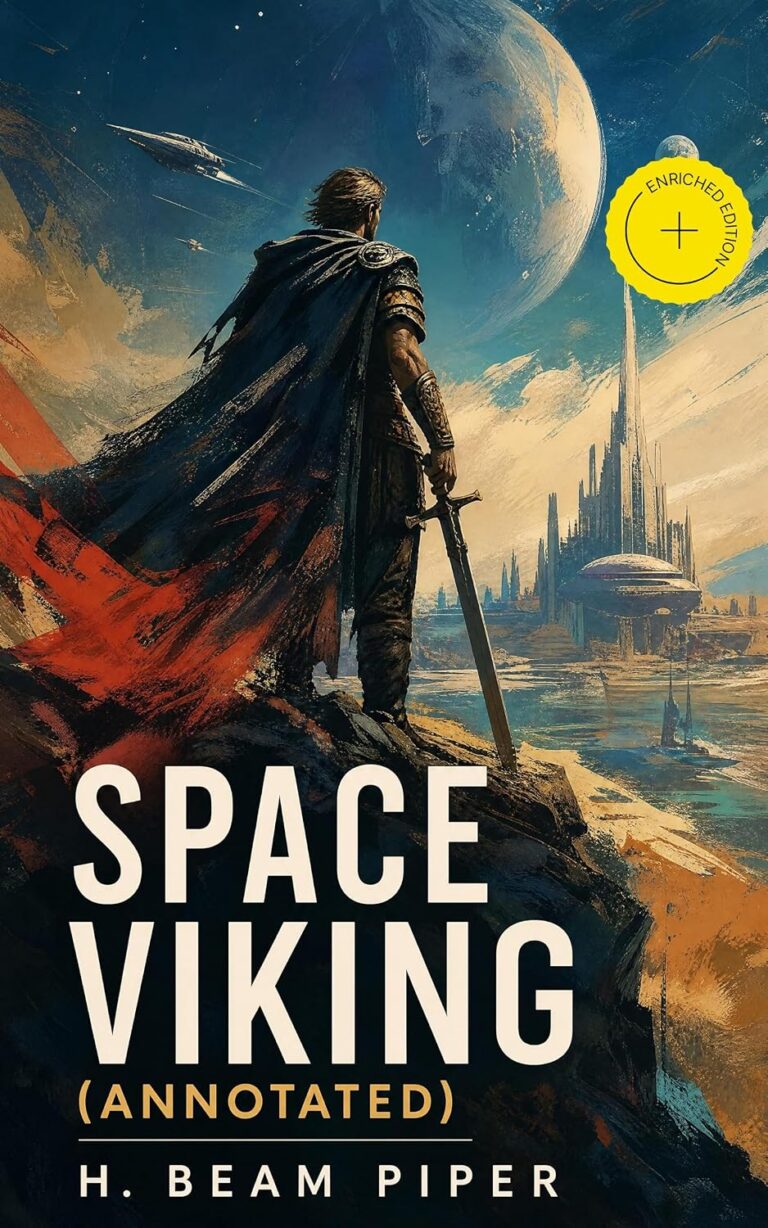
Space Viking is a vigorous work of mid-century American science fiction, fusing swashbuckling space opera with a sober meditation on imperial decline. Set within Piper’s Terro-Human Future History, it follows Lucas Trask, a Sword-World nobleman turned raider, whose quest for vengeance after personal catastrophe becomes an inquiry into governance, civilization, and barbarism. Its prose is brisk, martial, and lucid, yet beneath the adventure lies a historically minded pattern of fallen federations, frontier aristocracies, and the fragile institutions that preserve culture. H. Beam Piper brought to the novel a distinctive autodidact’s command of history, weaponry, politics, and social theory. Born in Pennsylvania and largely self-educated, he was fascinated by recurrent historical cycles and by the material conditions that sustain order. These concerns inform his fiction’s unusual density: starships and blasters coexist with feudal law, trade policy, and constitutional speculation. Space Viking reflects Piper’s characteristic belief that civilization is neither inevitable nor self-sustaining. Readers who enjoy classic science fiction with intellectual ballast will find Space Viking especially rewarding. It offers action, revenge, and interstellar spectacle, but its lasting force lies in its stern question: what must individuals build after conquest ends?