A practical arrangement, a few rules, and two people who are definitely going to follow them. Sure.
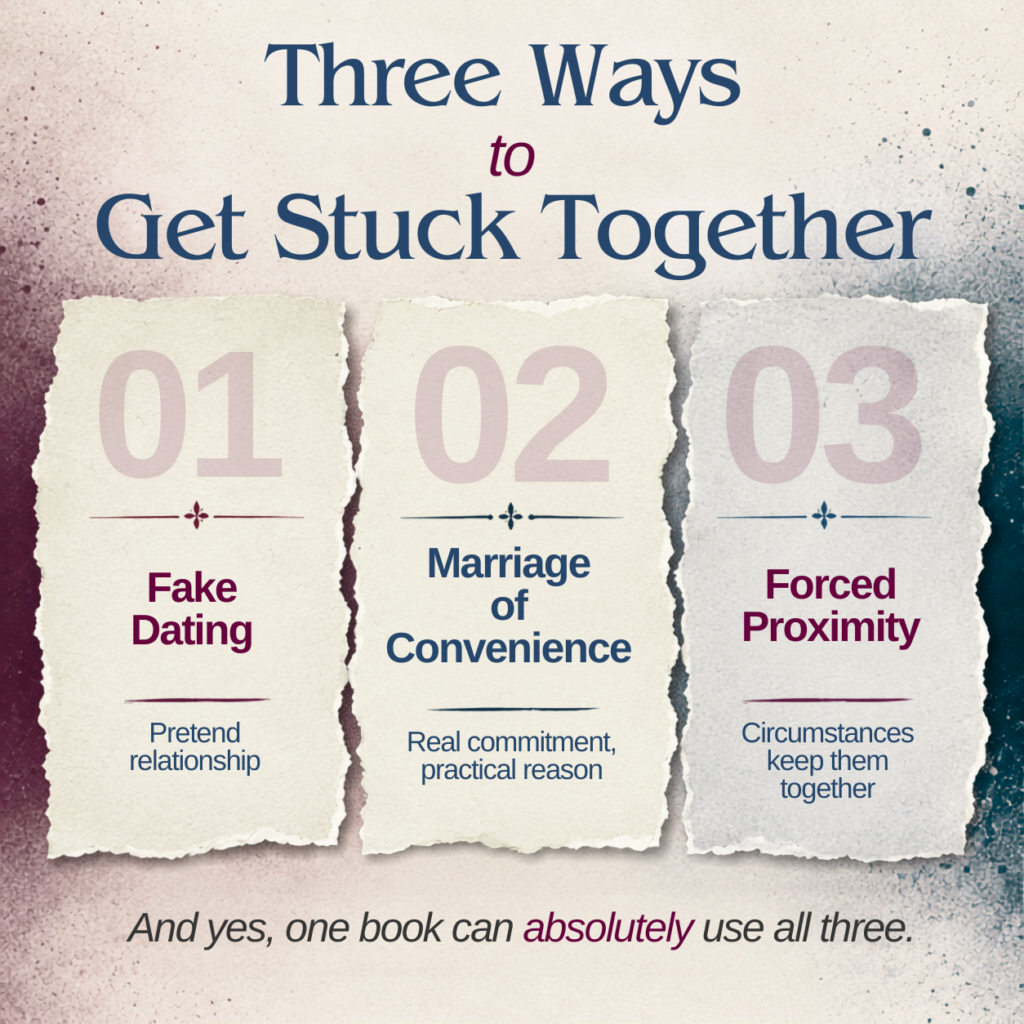
Fake dating romance books start with a very reasonable plan: pretend to be together, solve a problem, and walk away when the arrangement is over. Fictional couples are remarkably bad at that last part.
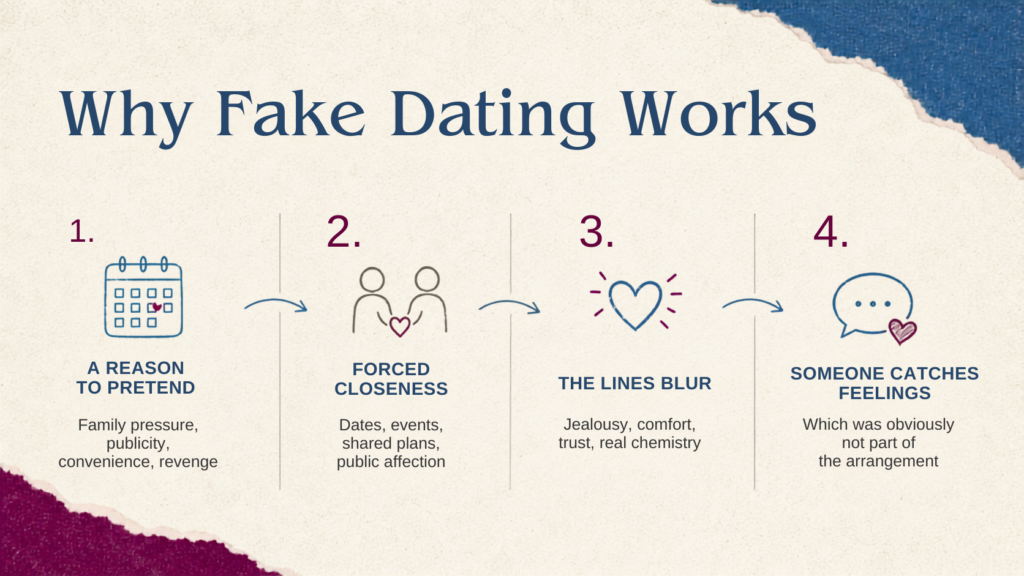
The appeal comes from watching two people perform a relationship before they are ready to admit they want one. Public affection, staged dates, family events, shared hotel rooms, carefully rehearsed backstories. Eventually somebody forgets which parts were supposed to be pretend.
Quick answer: Fake dating romance books follow characters who agree to pose as a couple for a practical reason, then discover the performance is changing their actual relationship. The trope frequently overlaps with forced proximity, romantic comedy, sports romance, workplace romance, enemies-to-lovers, and marriage of convenience.
Why Fake Dating Works So Well in Romance
Fake dating gives a romance permission to skip straight to emotional proximity. The characters may not trust each other yet, but suddenly they have to attend events together, remember each other’s coffee order, pose for photos, meet the family, or convincingly explain how they supposedly fell in love.
That setup works especially well when the characters already have friction. Pair fake dating with an old grudge or rivalry, and you get the same resistance that makes enemies-to-lovers books so satisfying.
It also fits naturally into romantic comedy. A fake relationship creates plenty of opportunities for badly timed jealousy, overly convincing kisses, intrusive relatives, and agreements that become less practical by the chapter. Readers who want more of that lighter side of romance can browse our romantic comedy books next.
The reason for pretending changes from book to book. The emotional problem is wonderfully consistent: acting like a couple requires doing quite a lot of things real couples do.
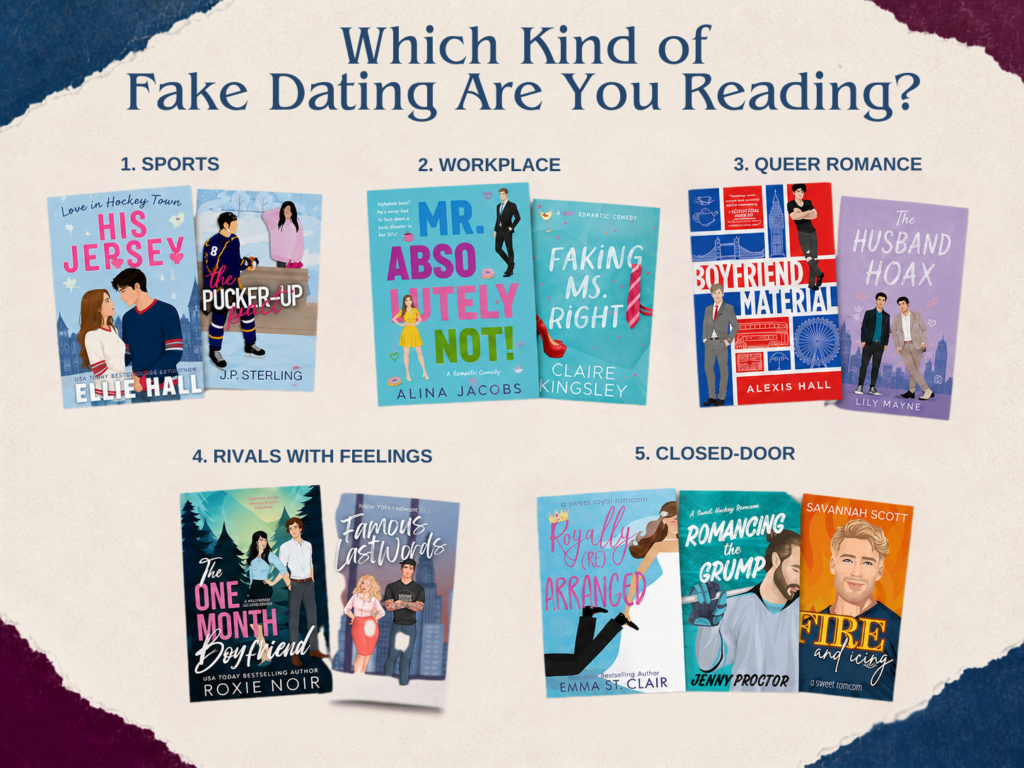
17 Best Fake Dating Romance Books to Read Now
These fake dating romance books take the trope through sports, workplaces, royal expectations, public-image problems, fake marriages, queer romance, small towns, and several agreements that were clearly drafted without enough attention to the feelings clause.