A reader’s guide to the genre where enchanted worlds make falling in love considerably more dangerous.
What is romantasy? Romantasy is a genre that blends fantasy and romance so both are essential to the story. The central relationship shapes the main plot, while magic, supernatural creatures, invented worlds, or political conflict shape the relationship.
Remove either side and the book becomes a different story. The fantasy is not decoration, and the romance is not taking a scenic detour through the plot.
TL;DR: Romantasy combines a central romance with an essential fantasy plot. The relationship changes the characters’ choices and the direction of the story, while magic or worldbuilding creates consequences the romance could not have in an ordinary setting. It can be sweet or spicy, young adult or adult, and fantasy-forward or romance-forward.
What Is Romantasy, Exactly?
A book generally qualifies as romantasy when its romantic arc and fantasy conflict depend on each other. It’s a subgenre blending romance and fantasy, but readers and publishers do not use one perfectly fixed ratio for every title.
In practical terms, answering what is romantasy comes down to whether the love story and fantasy conflict would still work without each other.
Use these three questions:
- Would removing the central romance significantly change the main plot?
- Would removing the magic or fantasy world significantly change the relationship?
- Do the emotional and external conflicts develop together?
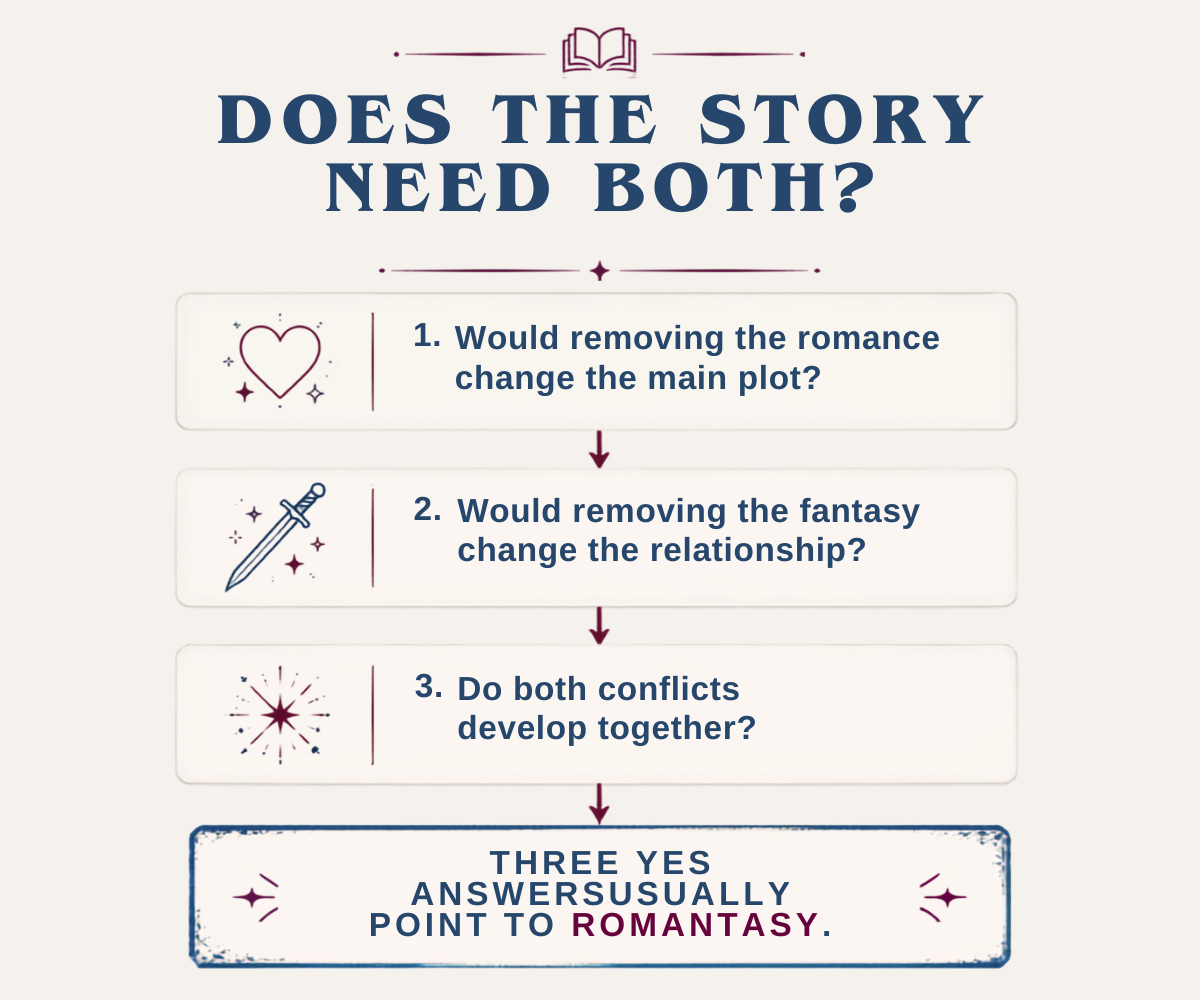
If the answer is yes to all three, the book sits comfortably within romantasy. A dragon on the cover helps with shelving, but it is not legally binding.
How Is Romantasy Different From Similar Genres?
Romantasy, fantasy romance, fantasy with romance, and paranormal romance overlap. The labels are useful reading guides, not heavily guarded border crossings. Writers and readers still use several definitions of romantasy, particularly when deciding whether fantasy or romance receives more emphasis.
| Category | Common emphasis | What usually defines it |
|---|---|---|
| Romantasy | Fantasy and romance are both central | Removing either would substantially change the story |
| Fantasy romance | The love story usually receives the strongest emphasis | Romance structure and an optimistic romantic resolution are often expected |
| Fantasy with romance | The fantasy plot remains primary | The relationship matters, but the larger story may still work without it |
| Paranormal romance | The romance involves supernatural characters or powers | The story often takes place in a recognizable modern world with vampires, witches, shifters, or ghosts |
Our guide to fantasy romance books shows how the romance-forward side of the category works in practice.
Does Romantasy Need a Happy Ending?
Not always. Romance novels traditionally center a love story and end with an emotionally satisfying, optimistic resolution.
Romantasy is often used more broadly. One installment may end on a cliffhanger, separate the couple, or delay the romantic resolution until later in a series.
Readers who require a happily ever after or happy for now should check the book’s classification and series status. A cliffhanger can still feel personally targeted.
Is Romantasy Always Spicy?
No. Heat level does not determine whether a story is romantasy.
The genre includes closed-door romance, slow-building attraction, explicit adult books, and young adult stories with little or no sexual content. The romance must be central. It does not need to reach a particular temperature.
Did BookTok Create Romantasy?
No. BookTok helped make the label far more visible, but fantasy and romance have been sharing pages for decades and go much further back than the recent publishing boom.
The newer label gave readers, booksellers, and publishers an efficient name for the combination, plus a much faster way to find six recommendations before breakfast.
Where Should New Romantasy Readers Start?
Start with the fantasy element you already enjoy.
Readers drawn to immortal courts, magical bargains, and strange rules can try fae romantasy.
Readers who prefer rider bonds, academies, and larger battles may want dragon romantasy.
For curses, horror elements, and death magic, browse our guide to dark romantasy books.
Readers interested in immortal politics, blood magic, and supernatural attraction can explore vampire romantasy books.
For tropes, subgenres, deals, and recommendations across the category, use the full romantasy guide.
Romantasy FAQ
Is A Court of Thorns and Roses romantasy?
Yes. The series is widely treated as romantasy because its relationships, fae world, magical conflicts, and political choices remain closely connected.
Is Fourth Wing romantasy?
Yes. Its central romance develops inside a fantasy plot built around dragons, rider bonds, military training, rebellion, and secrets that directly affect the relationship.
Can young adult books be romantasy?
Yes. Romantasy can be young adult or adult. The audience category affects character age, themes, and content level, not whether fantasy and romance can share the central plot.
Is every fantasy book with a romance romantasy?
No. A fantasy novel can include attraction or a romantic subplot without becoming romantasy. The relationship needs to be important enough that removing it would significantly change the story.
Find Your Corner of Romantasy
Romantasy can involve fae courts, dragons, witches, vampires, monsters, old gods, or magic that has developed an alarming interest in other people’s relationships. The defining idea stays the same: love and fantasy both move the story.
Want more romantasy books without searching the same shelves again? Choose your favorite genres and get daily eBook deals from Apropos Books.