Destiny-approved soul bonds, forbidden power, rival kingdoms, and several people who would benefit from one honest conversation.
Romantasy tropes work best when the love story and fantasy conflict put pressure on each other. It’s described as a genre where romance and fantasy are both essential, with the relationship and worldbuilding developing together. That same standard shapes this ranking.
Enemies to lovers takes the top spot, followed by fated mates and forbidden magic. Each can turn war, power, loyalty, or destiny into personal stakes. Familiar does not have to mean automatic, but the characters still need motives, consequences, and something more persuasive than suspiciously good cheekbones.
New to the genre itself? Start with our guide to what romantasy means and how it differs from related fantasy genres.
TL;DR: The strongest romantasy tropes connect the central relationship to the rules, power structures, and dangers of the fantasy world. Enemies to lovers ranks first for its built-in conflict and range, followed by fated mates, forbidden magic, forced proximity, and magical bonds.
How the Romantasy Tropes Were Ranked
This is an Apropos Books editorial ranking, not a claim that every reader shares the same order. Some readers see fated mates and immediately clear their schedule. Others would prefer destiny to stop interfering and let the characters make their own questionable decisions.
Trope labels have become a useful form of book-discovery shorthand. The Guardian’s reporting on romance tropes examines how familiar dynamics help readers identify the stories they want while also raising concerns about reducing entire books to marketing labels.
Romantasy author Stacey McEwan made a similar point in an interview about beloved and frustrating romantasy tropes. Familiarity can help readers find books, but execution determines whether the trope works.
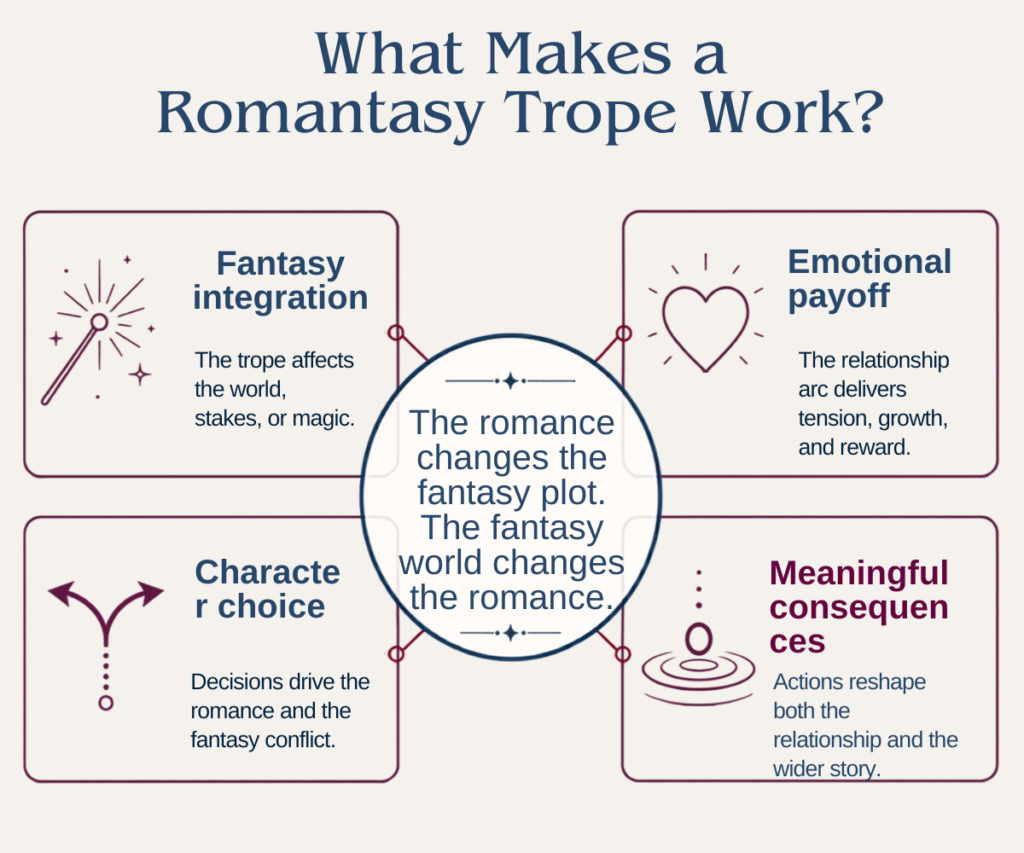
Each trope was ranked using four factors:
- Fantasy integration: Does the fantasy world create or complicate the relationship?
- Emotional payoff: Does the trope give the characters meaningful emotional work?
- Versatility: Can it feel fresh across different worlds, characters, and pairings?
- Predictability: How easily does it become a substitute for character development?
Tropes rank higher when removing the magic, politics, prophecy, or fantasy conflict would also weaken the romance.
Romantasy Tropes Ranked at a Glance
| Rank | Romantasy Trope | Strongest Appeal |
|---|---|---|
| 1 | Enemies to lovers | Conflict, chemistry, and changing loyalties |
| 2 | Fated mates | Destiny placed against personal choice |
| 3 | Forbidden magic | Power with intimate consequences |
| 4 | Forced proximity | Trust built under pressure |
| 5 | Magical bonds and shared power | Vulnerability made literal |
| 6 | Forbidden love | World rules become emotional obstacles |
| 7 | Political marriage | Romance that can alter kingdoms |
| 8 | Hidden identity | Attraction complicated by secrecy and power |
| 9 | Found family | A wider emotional world around the couple |
| 10 | Slow burn | Gradual trust and earned intimacy |
| 11 | Court intrigue | Desire becomes a political liability |
| 12 | Friends to lovers | Emotional safety with something larger at risk |
| 13 | The chosen one | Destiny complicates love and responsibility |
| 14 | Love triangles | Competing relationships or possible futures |
| 15 | Miscommunication | Conflict that requires careful justification |
1. Enemies to Lovers
Enemies to lovers ranks first because it allows the fantasy conflict to create the romantic tension.
The characters may serve rival kingdoms, practice opposing forms of magic, compete for the same throne, or believe the other person represents everything threatening their world. Every step toward intimacy forces them to question loyalties that once felt certain.
The strongest versions give both characters legitimate reasons for their hostility. They also require apologies, changed behavior, difficult choices, or a meaningful sacrifice. A cruel character does not become appealing merely because the narrative starts calling the insults banter.
Enemies to lovers works especially well with forced proximity, forbidden magic, hidden identity, and court intrigue. There is plenty to discuss when the attractive enemy may also overthrow your government before dinner.
For recommendations across romance and fantasy, browse our enemies-to-lovers books with real conflict and payoff.
2. Fated Mates
Fated mates ranks second because destiny makes the fantasy world intensely personal.
The bond may affect magic, senses, social status, physical health, or survival. That gives the relationship consequences before either character has decided what they actually feel.
The strongest fated-mates stories treat destiny as a complication rather than a complete romantic argument. The characters still need to build trust and choose one another. Rejected bonds, one-sided recognition, and conflicting duties can preserve tension and agency.
The trope becomes less convincing when the bond excuses harmful behavior or replaces the entire relationship arc. Destiny may introduce two people. It should not be responsible for every conversation afterward.
Readers who prefer supernatural recognition, mating bonds, shifters, and immortal relationship complications may also enjoy our paranormal romance book guide.
3. Forbidden Magic
Forbidden magic ranks third because power itself becomes a relationship risk.
One character may possess a dangerous gift, belong to a hunted magical group, or use outlawed power to save someone they should not trust. Attraction then carries the risk of exposure, corruption, imprisonment, or political collapse.
The trope works when the magical rules are specific and the consequences remain consistent. Forbidden magic should cost something. Calling a power forbidden while allowing the character to use it freely removes most of the tension.
It becomes especially effective when the love interest must decide whether to report, protect, exploit, or join the person hiding the power.
For books shaped by curses, death magic, brutal courts, and riskier bargains, continue with our dark romantasy recommendations.
4. Forced Proximity
Forced proximity earns fourth place because it gives characters enough shared time to become more than their first impressions.
A magical tether, dangerous quest, diplomatic mission, shared prison cell, survival situation, or bodyguard assignment can keep two reluctant allies in the same space. The fantasy plot supplies a credible reason for the relationship to develop.
The forced part should come from circumstance, not a refusal to respect boundaries. The characters need room to observe each other, revise their assumptions, and build trust through action.
This trope loses power when the reason for staying together feels flimsy. A continent full of inns probably has more than one room available. The author may still choose otherwise, obviously, but the setup should at least commit to the explanation.
5. Magical Bonds and Shared Power
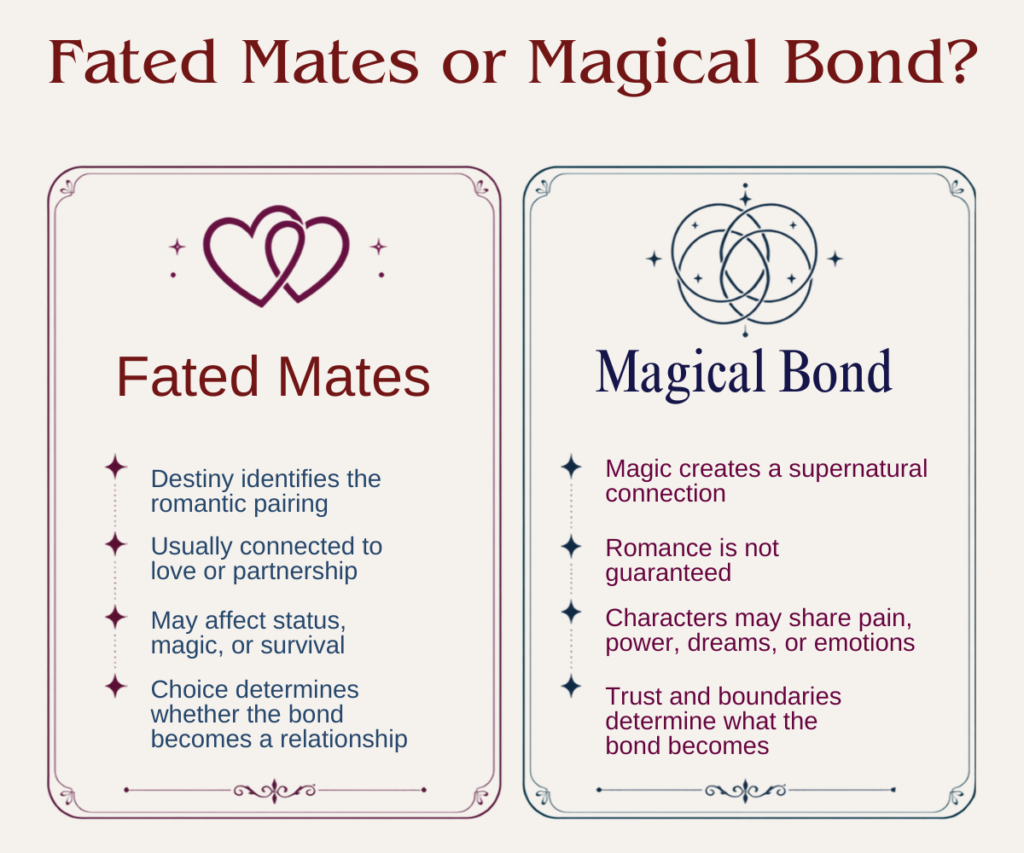
Magical bonds rank fifth because they make vulnerability literal.
Characters may share pain, dreams, emotions, memories, power, or physical consequences. A person who refuses to discuss their feelings may find that more difficult when those feelings are glowing through someone else’s hands.
A magical bond differs from fated mates. Fated mates identifies a destined romantic pairing. A magical bond creates a supernatural connection, but romance is not guaranteed.
The strongest versions establish clear limits and allow both characters to respond differently. The bond should complicate intimacy rather than replace it. Questions about privacy, consent, responsibility, and control can make the connection far more interesting than automatic closeness.
Dragon-and-rider bonds offer another version of magical connection, particularly when the bond affects power, loyalty, survival, and the romantic relationship. Explore more in our dragon romantasy book guide.
6. Forbidden Love
Forbidden love places the relationship directly against the laws and expectations of the fantasy world.
The couple may come from rival kingdoms, species, magical orders, religions, or social classes. Their feelings carry consequences that extend beyond personal disappointment.
This trope works when the prohibition has a clear reason, even when that reason is unjust. Both characters should risk something meaningful, and the story should explore what changing the rule would cost.
Forbidden love loses force when everyone objects for vague reasons or when the couple faces no lasting consequences. The world needs to care enough for the relationship to matter.
Readers drawn to immortal politics, blood magic, and relationships that violate several centuries of tradition can explore our vampire romantasy books.
7. Political Marriage
Political marriage combines romantic development with one of fantasy’s favorite activities: making two people personally responsible for international relations.
The characters begin with obligations, competing loyalties, and very little privacy. Their growing trust can alter alliances, succession plans, military strategy, and the balance of power.
The trope works best when both people have goals and leverage. One person should not exist solely to soften the other or provide access to a throne.
Arranged marriage, marriage of convenience, and political betrothal all fit here. The practical arrangement may be clear. The feelings usually refuse to remain so cooperative.
Fae courts are particularly good at turning engagements, bargains, and romantic alliances into government policy. Browse our fae romantasy books with courts and magical bargains.
8. Hidden Identity
Hidden identity ranks eighth because secrecy can change both the romance and the fantasy plot at once.
A character may be a hidden heir, disguised royal, spy, outlawed mage, masked competitor, or member of the enemy court. The reveal then affects trust, political power, and the character’s place in the world.
A satisfying reveal needs clues and consequences. The other person should be allowed to feel betrayed, even when the deception had a reasonable purpose.
The weakest version delays the truth only because the story needs another hundred pages. The strongest version asks whether the relationship can survive what the identity represents.
9. Found Family
Found family is not strictly a romantic dynamic, but it gives the central relationship a richer emotional world.
The couple gains friends, allies, mentors, and fellow survivors who matter beyond their usefulness to the plot. Those relationships create belonging, loyalty, disagreement, and support outside the romantic pairing.
The group needs time to become a family. Sharing one meal and surviving one attack may begin the process, but it should not complete it.
Found family ranks below the central relationship tropes because it does not automatically connect romance to fantasy. Used well, however, it gives readers more people to care about and authors more relationships to place under pressure.
10. Slow Burn
Slow burn remains one of the most satisfying romantic structures, but it ranks tenth because it does not inherently require fantasy.
The gradual development needs to come from changing knowledge, earned trust, conflicting duties, or emotional readiness. A war, magical apprenticeship, dangerous journey, or political alliance can give the relationship natural time to grow.
Delaying a kiss is not enough. Slow burn needs visible movement, even when that movement is small.
The payoff works because readers have watched the characters choose one another in dozens of less obvious moments first. Shared plans, defended boundaries, private jokes, and difficult acts of trust all count.
11. Court Intrigue
Court intrigue turns attraction into a political liability.
Every conversation may be observed. Every alliance may have a price. A private romantic decision can change succession, expose a spy, or give an enemy useful leverage.
This trope ranks lower because court aesthetics can become decoration. Masquerades and ornate thrones are helpful, but they do not replace functioning politics.
The strongest court intrigue gives each faction a clear goal and makes the romantic relationship affect those goals. A court should feel like a network of interests, grudges, debts, and loyalties rather than a waiting room full of attractive nobles.
12. Friends to Lovers
Friends to lovers offers emotional safety in a genre where almost everything else may be trying to kill the characters.
The pair already understands each other’s habits, fears, and loyalties. The tension comes from risking a relationship that matters before romance enters the picture.
It ranks below enemies to lovers because friendship alone does not connect the romance to the fantasy plot. The strongest versions give the characters different responsibilities, magical roles, or possible futures that complicate the transition.
Years of shared history can make the emotional payoff substantial. It can also make readers wonder how two competent adults missed several hundred obvious signs.
13. The Chosen One
The chosen-one trope raises the stakes by placing destiny, duty, and public expectation on one character.
A prophecy can make romance feel impossible, dangerous, or politically useful. The love interest may support the chosen one, oppose the prophecy, be threatened by it, or be destined to stop them.
The trope ranks lower because the relationship can become secondary to the heroic role. The love interest needs an independent purpose rather than existing as emotional encouragement between battles.
The strongest version questions what being chosen actually means. Destiny may identify the person, but it should not make every decision for them.
14. Love Triangles
A love triangle works best when the two relationships represent different values, futures, or loyalties.
One person may offer safety while another represents freedom. One may belong to the character’s former life while another understands the dangerous power they are becoming.
The third person needs to be a complete character. Treating someone as a temporary obstacle makes the outcome obvious and the emotional conflict thinner.
Love triangles rank near the bottom because they can delay a decision without deepening it. Used carefully, however, they can reveal what the central character truly wants from love and from their place in the fantasy world.
15. Miscommunication
Miscommunication ranks last because weak versions create conflict that could disappear after one direct conversation.
The trope can still work when speaking honestly carries a believable risk. Magical surveillance, political duty, trauma, cultural rules, or a binding oath may make silence understandable.
The misunderstanding also needs to match what the characters know. A person should not believe an obviously false claim merely because the final act needs an argument.
Miscommunication is most effective as a contained complication. When it carries an entire novel, readers may start mentally drafting the conversation everyone refuses to have.
That does not make the trope unusable. As McEwan noted in the earlier ABC interview, even a frequently frustrating trope can work when the reason for it is believable and the execution supports it.
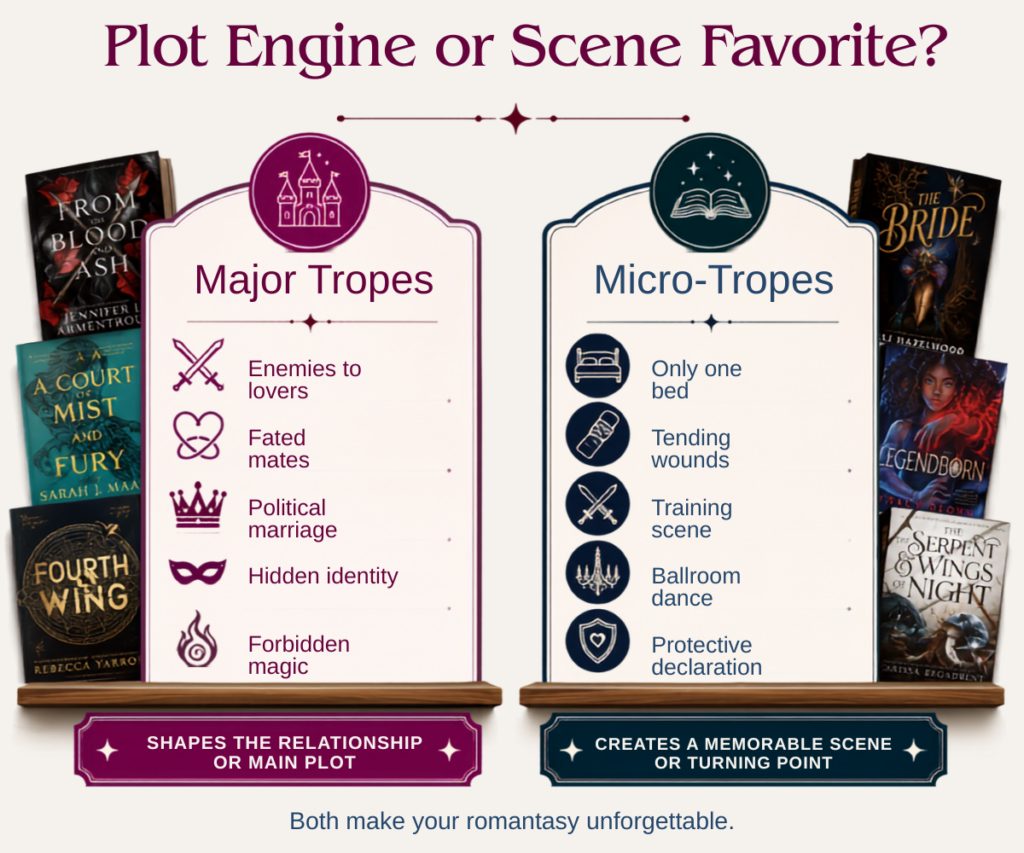
Romantasy Micro-Tropes That Work as Supporting Players
Some familiar moments are excellent scene ingredients but do not need to carry the full plot.
- Only one bed creates temporary physical closeness.
- Training scenes reveal competence, trust, and attraction.
- A weapon held between love interests can sharpen existing tension.
- A protective declaration can make private feelings public.
- Tending wounds creates space for reluctant care.
- Shared body heat works when the survival conditions are credible.
- A ballroom dance can disguise a negotiation, threat, or confession.
- A magical bargain can force characters to define exactly what they are willing to risk.
These moments are most satisfying when they advance a relationship already built on strong motives. A dagger near someone’s throat may be memorable. It is not a substitute for personality.
How to Choose a Romantasy Book by Trope
Start with the kind of tension you want, then combine two or three tropes that support it.
| Reader Preference | Primary Trope | Useful Supporting Tropes |
|---|---|---|
| Conflict and banter | Enemies to lovers | Forced proximity and court intrigue |
| Destiny and resistance | Fated mates | Rejected bond and forbidden love |
| Dangerous power | Forbidden magic | Shared power and hidden identity |
| Political maneuvering | Political marriage | Court intrigue and secret heir |
| Emotional safety | Friends to lovers | Found family and slow burn |
| Gradual trust | Slow burn | Forced proximity and shared quest |
| Secrets and revelations | Hidden identity | Forbidden love and political marriage |
| Supernatural connection | Magical bond | Shared power and reluctant allies |
A trope tells you the type of pressure a relationship may face. The combination tells you much more about how the book is likely to feel.
Romantasy Tropes FAQ
Are romantasy tropes spoilers?
Romantasy tropes usually identify a recurring relationship or plot dynamic without revealing exactly how the story unfolds. Labels such as secret heir, betrayal, rejected mate, or second-chance romance can reveal more, so they should be used carefully.
What is the difference between fated mates and a magical bond?
Fated mates means destiny has identified two characters as romantic partners. A magical bond links characters through power, pain, dreams, emotions, duty, or another supernatural force, but it does not necessarily guarantee that they will fall in love.
Can romantasy work without enemies to lovers or fated mates?
Yes. Romantasy needs a central love story and a meaningful fantasy conflict, not one required trope. Friends to lovers, political marriage, second chance, monster romance, hidden identity, and other dynamics can all support the genre.
Which romantasy trope is a good place to start?
Enemies to lovers and forced proximity are accessible starting points because the relationship progression is clear and the fantasy conflict keeps the characters interacting. Readers who prefer destiny-driven relationships may prefer fated mates or magical bonds.
Is forbidden magic the same as forbidden love?
No. Forbidden magic concerns a power the character is prohibited from possessing or using. Forbidden love concerns a relationship that the world, family, law, religion, or political system prohibits. A story can use either trope or combine both.
The Best Romantasy Trope Is the One the Story Earns
A familiar trope tells readers where the emotional pressure may come from. The characters, world, and consequences determine whether it matters.
Give us rival kingdoms, dangerous power, inconvenient soul bonds, or two longtime friends finally noticing the obvious. Just make them work for it.
Want more romantasy books in your inbox? Choose romantasy as one of your favorite genres and get daily eBook deals from Apropos Books.