What Counts as Historical Romance?
Historical romance is a romance novel set during an earlier period, with the central relationship shaped by the social realities of that setting.
The Romance Writers of America defines romance fiction by two essential elements: a central love story and an emotionally satisfying, optimistic ending. It classifies historical romance as romance set before 1950.
That separates historical romance from historical fiction that happens to include attraction, an affair, or a tragic relationship. Historical detail may shape both genres, but a romance keeps the developing relationship at the center of the plot.
In these books, history is more than decoration. Inheritance rules force marriages. Reputation limits choices. Class determines who is considered suitable. War, property, and family obligations keep creating problems that could have been solved by one candid conversation, which naturally means no one will have that conversation until much later.
Apropos also maintains dedicated collections where you can browse more historical romance books or narrow the search to the Regency romance collection.
Why Are So Many Historical Romances Set in the Regency Era?
Regency romance gives authors a useful combination of strict social expectations and shifting ideas about class, wealth, reputation, and marriage.
The formal British Regency lasted from 1811 to 1820, when the future George IV served as Prince Regent for his father, George III. The dates are documented in the UK Parliament briefing on regency and Counsellors of State.
Romance publishing often uses Regency more broadly for stories set around the early nineteenth century. Familiar elements include aristocratic society, assemblies, country estates, inheritance disputes, reputation, and a marriage market that treated personal compatibility as a pleasant optional feature.
Those restrictions create immediate stakes. A private meeting can cause a scandal. A family debt can determine whom someone marries. A woman with limited financial independence has good reason to treat courtship as more than flirtation.
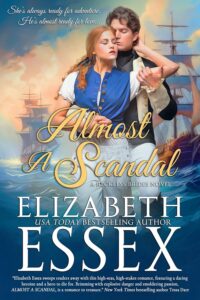
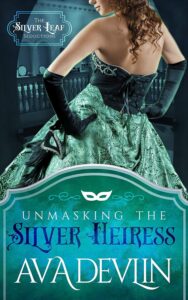
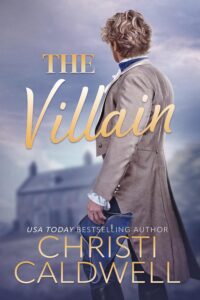
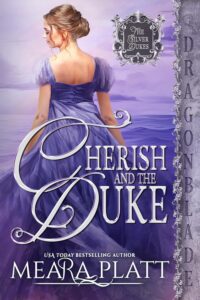
The setting also supports a wide range of stories. Cherish and the Duke offers a lighter courtship plan, while The Villain moves into darker and more explicit territory. Almost a Scandal leaves the ballroom for naval adventure, and Unmasking the Silver Heiress adds spies and smugglers.
How Are Regency and Victorian Romance Different?
Regency romance is generally associated with early nineteenth-century Britain. Victorian romance is set during Queen Victoria’s reign from 1837 to 1901, as documented by the official Royal Family history of Queen Victoria.
Victorian stories can incorporate industrial expansion, rapid urban growth, changing technology, widening class tensions, labor conditions, and social reform. Railways, newspapers, factories, crowded cities, and new professions can have a much larger role.
The romantic ingredients can overlap. Both settings support strict etiquette, inheritance conflict, class barriers, family pressure, and reputational risk. The difference lies in the period and the historical forces available to shape the story.
| Feature |
Regency Romance |
Victorian Romance |
| Core period |
Early nineteenth-century Britain, formally 1811 to 1820 |
Queen Victoria’s reign, 1837 to 1901 |
| Common conflicts |
Marriage markets, inheritance, reputation, and aristocratic duty |
Class mobility, industry, urbanization, work, and social reform |
| Familiar locations |
Country estates, assemblies, townhouses, clubs, and military settings |
Cities, estates, factories, railways, offices, and expanding suburbs |
| Coverage in this list |
Strong |
Not substantially represented |
The current recommendations belong primarily to Regency and adjacent early nineteenth-century settings. Readers looking specifically for factories, railways, late-century London, or Victorian social change will need a different collection.
Which Historical Romance Should You Read First?
The easiest approach is to choose the complication you would most enjoy watching two fictional people handle badly.
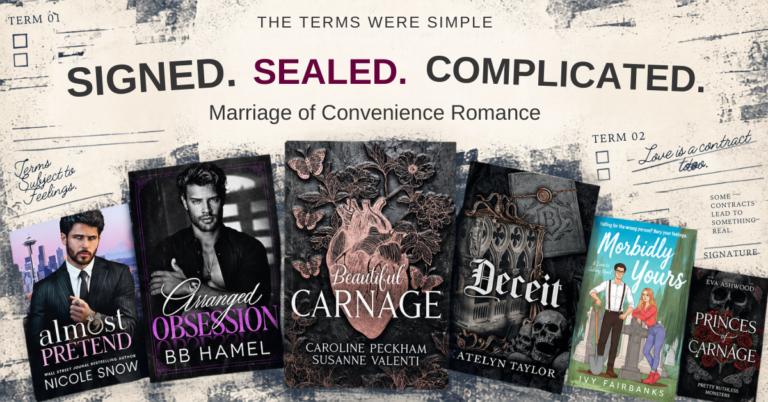
Marriage-of-Convenience Romance
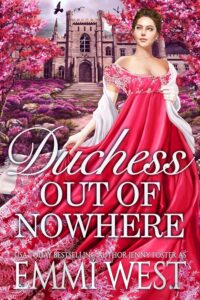
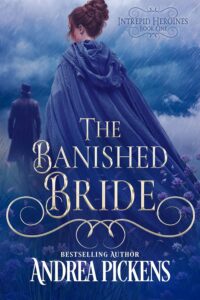
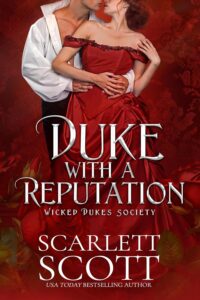
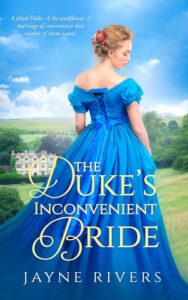
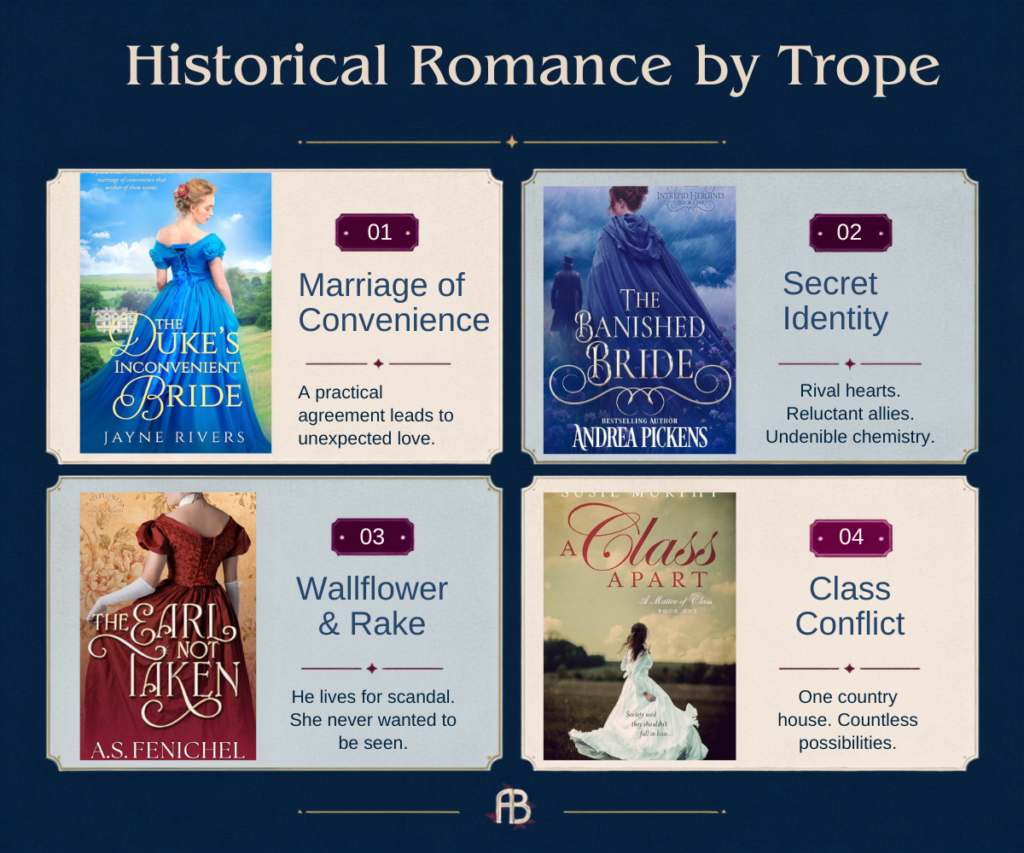
Start with Duchess Out of Nowhere, The Duke’s Inconvenient Bride, Duke with a Reputation, or The Banished Bride.
These romances use marriage as the beginning of the problem rather than its solution. The arrangements involve scandal prevention, inheritance, abandoned spouses, substitute brides, and agreements constructed by people who were extremely confident they could remain emotionally detached.
Mystery, Espionage, and Adventure
Choose Almost a Scandal for naval battle and disguise or Unmasking the Silver Heiress for spies and smugglers.
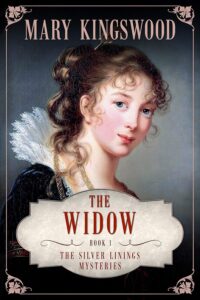
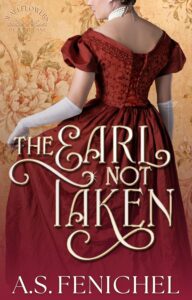
The Banished Bride adds military intelligence, The Earl Not Taken follows an investigation into a questionable suitor, and The Widow follows a quieter trail of secrets.
Closed-Door and Lower-Spice Romance
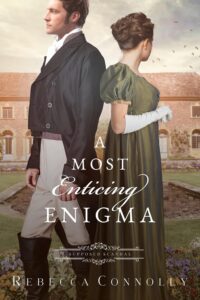
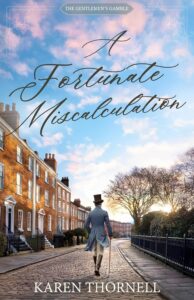
Start with A Most Enticing Enigma, A Fortunate Miscalculation, or The Widow.
These are good choices for readers who want courtship, emotional development, capable heroines, and historical complications without explicit scenes.
Steamy Historical Romance
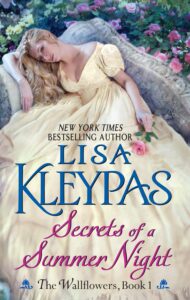
Try The Villain, Duke with a Reputation, Secrets of a Summer Night, or Unmasking the Silver Heiress.
The Villain is the darkest and most explicit selection in the group. Readers deciding how far they want to venture into darker material can also read our guide to dark romance, heat levels, and content warnings.
Class Conflict and Social Pressure
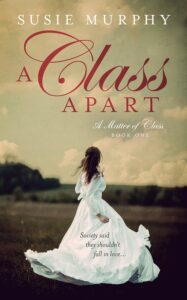
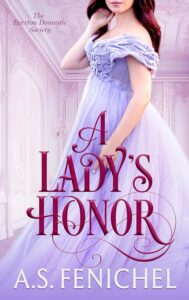
Start with A Class Apart, Secrets of a Summer Night, A Most Enticing Enigma, or A Lady’s Honor.
These stories give the historical setting a substantial role in the relationship. Property, employment, financial security, family status, and social rank affect what the characters can risk and whether a happy ending appears remotely practical.
Historical Romance FAQ
What are historical romance books?
Historical romance books are romance novels set during an earlier historical period. The love story remains central, and the ending is emotionally satisfying and optimistic.
Are Regency romance and historical romance the same?
Regency romance is one type of historical romance. Historical romance can also be set during medieval, Georgian, Victorian, Edwardian, western, wartime, and other historical periods.
Which historical romance book is good for beginners?
Secrets of a Summer Night is a strong entry point for readers who want wallflower friendship, class differences, family pressure, and sensual romance.
A Fortunate Miscalculation is a better starting point for readers who prefer clean romance and lower-spice courtship.
Are all historical romance books steamy?
No. Heat levels vary considerably. This collection includes closed-door and clean romances as well as steamy and explicit selections.
Which historical romance books include mystery or espionage?
Unmasking the Silver Heiress, The Banished Bride, The Earl Not Taken, Almost a Scandal, and The Widow incorporate mystery, investigation, espionage, military danger, or concealed identities.
There Is Always Room for One More Duke
Historical romance makes every practical decision more difficult than necessary. Money comes with conditions, estates come with secrets, and marriage proposals are rarely made by anyone behaving sensibly.
Choose the scandal, spy, widow, wallflower, mathematician, or deeply inconvenient duke that suits your reading mood. Readers interested in romance with a supernatural problem can continue with our paranormal romance recommendations, while those who prefer history with a temporal complication can browse these time-travel romance books.
Want more romance books in your inbox? Choose your favorite genres and join the Apropos Books daily deals newsletter for new recommendations and eBook deals.